

Brain Development – Let’s take a moment to imagine a child’s world of outdoor play. Running across green fields, creating castles out of the sand, swinging under the blue sky, or simply sitting on the grass, watching the clouds shift shapes. Each of these experiences are not just delightful but also a vital part of a child’s brain development. Yes, you heard it right! The fun-filled outdoor play sessions play a critical role in shaping their cognitive, physical, emotional, and social skills.

Blue Skies, Bright Minds: Outdoor Plays Impact on Your Childs Brain Development
The Joy of Movement: Physical Play and Brain Growth
Outdoor play is a fantastic way to keep kids physically active and encourage a healthy lifestyle. But it’s not just about flexing muscles and promoting heart health. Physical play in the great outdoors serves as a foundation for their cognitive development as well.
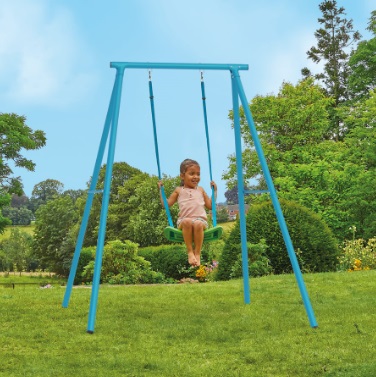
Think about the child swinging with pure joy on a Metal Swing Set. With each swing, they learn about balance and proprioception, which are crucial for understanding their bodies in space. Each game of tag or hide-and-seek enhances their coordination, agility, and spatial awareness. While it seems like fun and games, each moment of physical play is subtly nurturing their brain.
Imagination Unleashed: Creativity and Language Development
The outdoors can be a canvas for a child’s vivid imagination. A simple garden can transform into a magical kingdom, a tree stump becomes a gallant steed, or a Swing Seat can become a spaceship exploring new galaxies. This imaginative play fuels creativity and fosters language development as children come up with stories and learn to express their ideas.
Social Butterflies: Developing Emotional Intelligence and Social Skills
Outdoor play isn’t just about solo adventures. More often than not, it involves play dates and group games. It’s during these moments that children learn to navigate the complexities of social interaction. Sharing the sandbox, figuring out who gets the first turn on the slide, or collaborating to build the perfect fort – all these scenarios nurture emotional intelligence and social skills. They learn about cooperation, negotiation, leadership, and empathy.
The Power of Green: Nature and Mental Health
Outdoor play introduces children to the soothing effects of nature, a phenomenon often underestimated. The term “nature-deficit disorder,” coined by Richard Louv, highlights the negative impact of alienation from nature on children’s mental health. On the other hand, time spent amidst nature can reduce stress, improve mood, and increase attention span. Whether it’s observing the tiny inhabitants of a garden or simply enjoying the fresh air, nature has a calming effect on the mind.
Screen Time vs. Green Time: The Impact on Attention Span
In the digital era, where screens are a significant part of children’s lives, outdoor play offers a refreshing break. Interestingly, trading screen time for ‘green time’ can have noticeable benefits on a child’s attention span. Engaging with the physical world, full of sensory stimuli, can help children improve their focus and observational skills. It’s a beautiful contrast to the fleeting attention demanded by fast-paced video content.


Concluding Thoughts: Nurturing Young Minds Under the Open Sky
Outdoor play and brain development are deeply interconnected. Each leap, each game, and each quiet moment under the blue sky is contributing to your child’s cognitive, physical, emotional, and social development. And it’s not just about elaborate adventure parks. Even your backyard or the neighbourhood park can be a playground for their growing minds.
As parents and caregivers, encouraging your little ones to embrace the great outdoors can give them a solid foundation for life. So, let’s swap screen time with sunshine and nurture those bright, young minds under the big, blue sky! After all, there’s so much more to a child’s playtime than meets the eye.