

Primary Wound Dressings & Their Specific Uses – Wound healing is a complicated and somewhat impressive natural human body process and essentially the most important aspect when caring for a wound, either on a professional nursing level or temporarily treating a wound at home, is to ensure that the wound heals as quickly and correctly as possible. So, with this in mind, continue reading to learn about the six most effective wound dressings and each specific use.
Primary Wound Dressings & Their Specific Uses
1. Hydrogel
If the particular wound is either leaking a small amount of liquid, or is indeed not leaking at all, then one of the most effective wound dressings you can use is that of hydrogel.
Hydrogel should, conversely, never be used on necrotic or overly painful wounds but can often be the right choice for second-degree burns and wounds that have become infected.
2. Silicone Gel
One of the most innovative materials that is vastly increasing in popularity and renowned when it comes to wound dressings is that of silicone gel coatings.
Leading medical establishments, hospitals, and GP surgeries are choosing to stock silicone gel coated dressings for wound care for a range of different injuries.
3. Foam Dressings
Regardless of the severity of the particular wound which needs to be cared for and dressed, foam dressings work to absorb various exudates from the surface of a wound and works to create an environment around the area which promotes healing much faster.
Foam dressings allow water vapour to come through to the surface of the wound in a controlled setting and thus keep the wound moist yet still prevent any unwanted and potentially dangerous bacteria entering the area.

4. Cloth
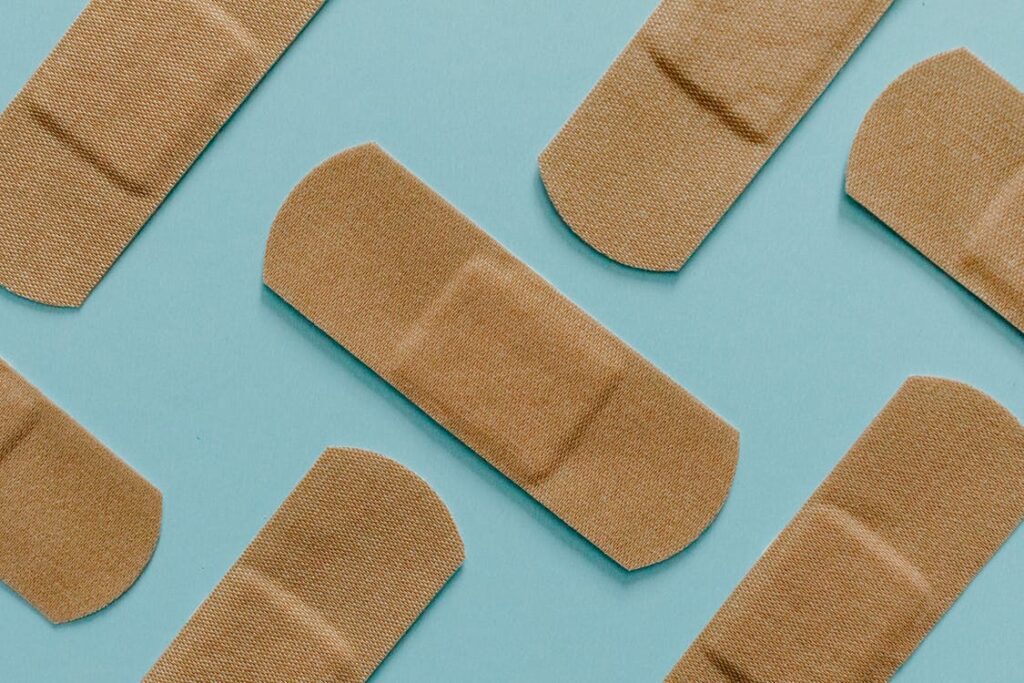
Perhaps one of, if not the most commonly used type of wound dressing of all is the cloth dressings. They are often used to protect and promote the healing of a wide variety of different types of wounds, usually minor injuries such as cuts and grazes.
Cloth dressings either come in a sanitised roll which can be cut to size depending on the surface area of the wound, or in pre-cut dressings for smaller cuts on fingers and toes.
5. Hydrocolloid
If a wound is leaking fluid, whether a little or indeed a lot, one of the best types of wound dressing to choose would be a hydrocolloid dressing.
Hydrocolloid dressings are also suitable to be used on necrotic wounds, pressure ulcers, venous ulcers and burns and work by creating a moist yet sanitised condition around the area of the wound and within the wound itself.
6. Alginate
Finally, but certainly just as importantly, the sixth most popular and fundamentally successful type of wound dressing used across the length and breadth of this country and beyond, is that of an alginate dressing.
Essentially, alginate dressings are the best choice to use on wounds which are leaking a high amount of liquid and are certainly the best type of dressing to use on burns of all severities.
With the above knowledge, you will be better equipped to help someone, including yourself, with minor and superficial wounds. Seek medical advice if the injury is more severe or you see no improvements over time.
*Collaborative post